Research & Study Centre
Sustainable Oversight for Resource Extraction
Independent, data-based evidence on extraction and on what happens to land, revenue and people afterwards. Starting in South Sumatra, built to travel to other extractive regions.
What is missing, and why we are placed to supply it
South Sumatra's economic transformation is being planned in public, through a provincial consultation forum with government, industry, unions, academics and civil society at the table. The plans are detailed. The evidence underneath them is uneven.
Post-mining land is treated as a cross-cutting element of that transformation, with land reuse listed as a near-term priority. But the planning is proceeding without a measured baseline of how much post-mining land exists, where it sits, or what condition it is in. Decisions about what to plant are being taken ahead of the data that would size them.
Independent monitoring and evidence support is a role the transformation plan explicitly assigns to civil-society actors. It is also the role for which a small, local, technically capable organisation is better suited than either government or industry, because it requires no permission and carries no commercial interest.
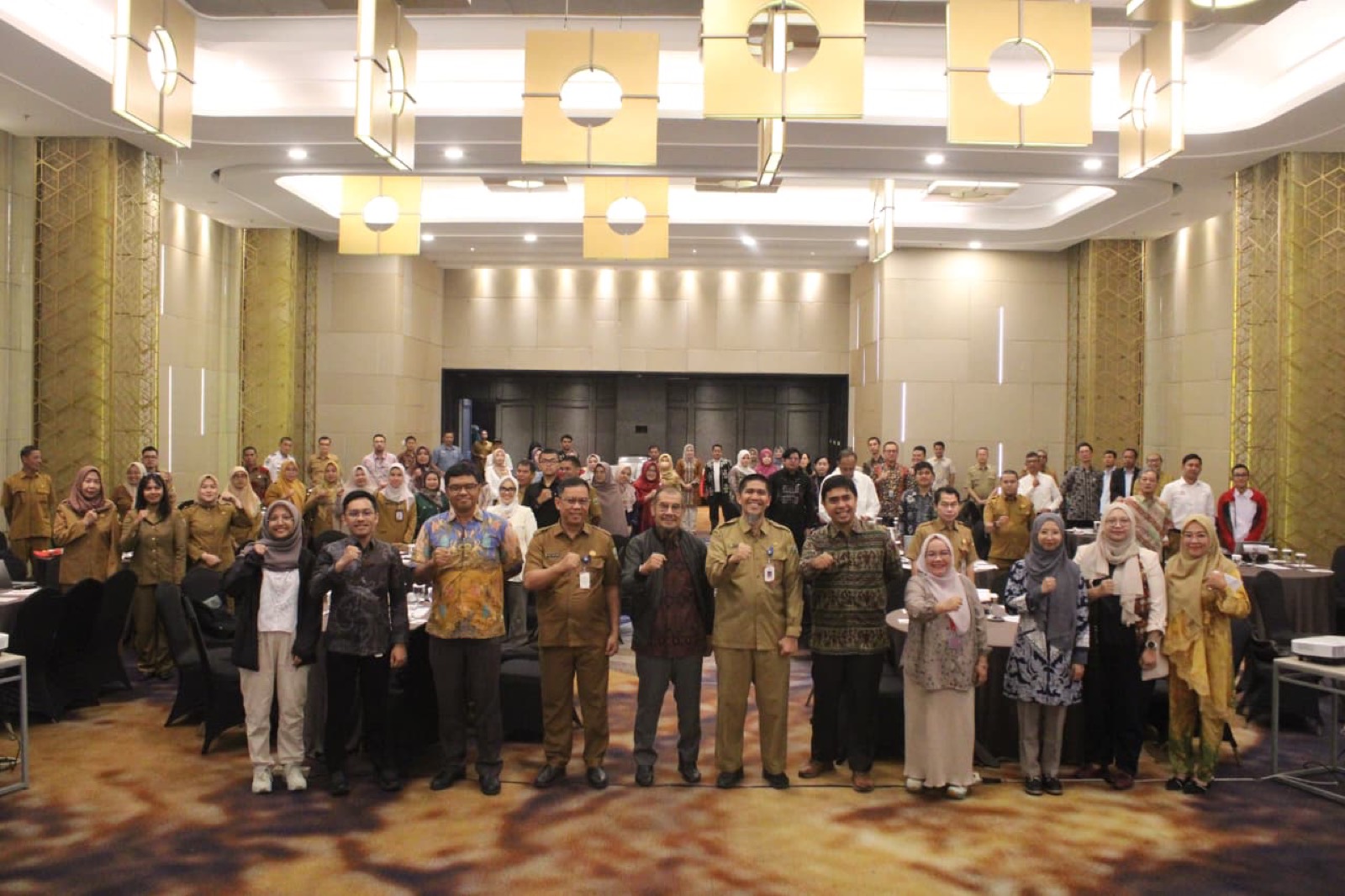
Our people attend the Forum Konsultasi Daerah as representatives of PERHAPI. We are not observers of this process from outside it. We saw the gap because we were in the room when it appeared.
Workstreams
Post-mining land and land-cover change
Mapping land opened by mining across the province from satellite imagery: extent, location, and change over time. The purpose is a baseline that reclamation planning, land redistribution and reuse proposals can actually be sized against.
This is the work we started first, because it is the gap we watched a live planning process run into.
Haul roads and coal logistics governance
South Sumatra has required coal transport to move off public roads and onto dedicated haul roads, rail and river, under Instruksi Gubernur No. 500.11/004/INSTRUKSI/DISHUB/2025. The direction is sound. The sequencing determines whether it lands as a managed transition or as a shock to production, regional revenue and employment in the mining districts.
We work on what the alternative infrastructure can actually absorb, and on what a staged transition would need in order to avoid the damage that an abrupt one causes.
Reclamation, post-mining obligations and carbon
What reclamation obligations require, what is delivered against them, and what restored land is worth when carbon is counted. This is the direction our workplan takes from year three, and it depends on the baseline that workstream one builds.
Where this goes next
Spatial analysis is where we start, not what we are limited to. We began there because it is the question a live planning process ran into, and because land is the one thing in this debate that can be measured from public data without anyone's permission. It is the entry point to the harder questions, not a substitute for them.
Those questions are economic, energy, social and environmental: what post-mining land is worth under different uses, what replaces coal in the regional energy mix and on what timetable, what happens to the households and the district budgets that depend on the sector today, and what the environmental liability actually is. Each of them needs a measured spatial baseline underneath it, which is why we built that first.
The geography widens the same way. Our first study covers 124 permits in one province and is deliberately preliminary. The method is built to be repeated, and we intend to run it across other Indonesian regions and other coal-producing countries, because a single province tells you what happened there while a comparison tells you what is structural and what is local.
How we work
- Public data first. Satellite imagery, government statistics and published records, so the method can be repeated and the result checked by anyone.
- Open outputs. Findings are published with their sources rather than circulated privately.
- Independent of the parties involved. We take no position for or against extraction. We report what the data shows.
- Useful to a decision. We choose questions where an actual decision is pending and the evidence is missing, not questions that are merely interesting.
Commission or collaborate
If you are planning, funding or scrutinising work in an extractive region and need independent evidence, we would like to hear from you.