Post-mining land
How much former mine land exists, where it is, and what state it is in. The baseline that land-reuse and reclamation planning currently lacks.
Yayasan Solusi Riset Edukasi
In Bahasa Indonesia, sore is the late afternoon, the part of the day that leads into sunset. South Sumatra is preparing for the sunset of coal. We were born and raised here, on top of the coal, and we think that preparation should rest on measured ground rather than on assumed numbers.
We have worked inside the coal sector. We started in South Sumatra because it is where the coal is. The work is built to travel to other extractive regions.
The horizon
South Sumatra produced around 120 million tonnes of coal in 2025, and the provincial energy and mineral resources office puts the remaining potential at roughly a hundred years at that rate. The coal is not about to run out.
What moves is the demand. Coal prices and volumes rise and fall from year to year while global energy markets keep shifting toward cleaner and renewable alternatives. A region whose economy sits on a resource with a century of supply and an uncertain buyer needs to know, in advance and in detail, what else its land and its people can do. That is a long afternoon to use well, and it is the whole reason this foundation exists.
Production and reserve figures: Indonesian Mining Association, January 2026.
What we work on
Spatial analysis is where we started, because land can be measured from public data and because that is the number a live planning process turned out to be missing. The economic, energy, social and environmental questions build on top of it.
How much former mine land exists, where it is, and what state it is in. The baseline that land-reuse and reclamation planning currently lacks.
The move of coal transport off public roads onto dedicated haul roads, rail and river, and what it costs the regional economy if the transition is unmanaged.
Post-mining obligations, ecosystem restoration and the carbon value of land that is restored rather than abandoned.
Why we exist
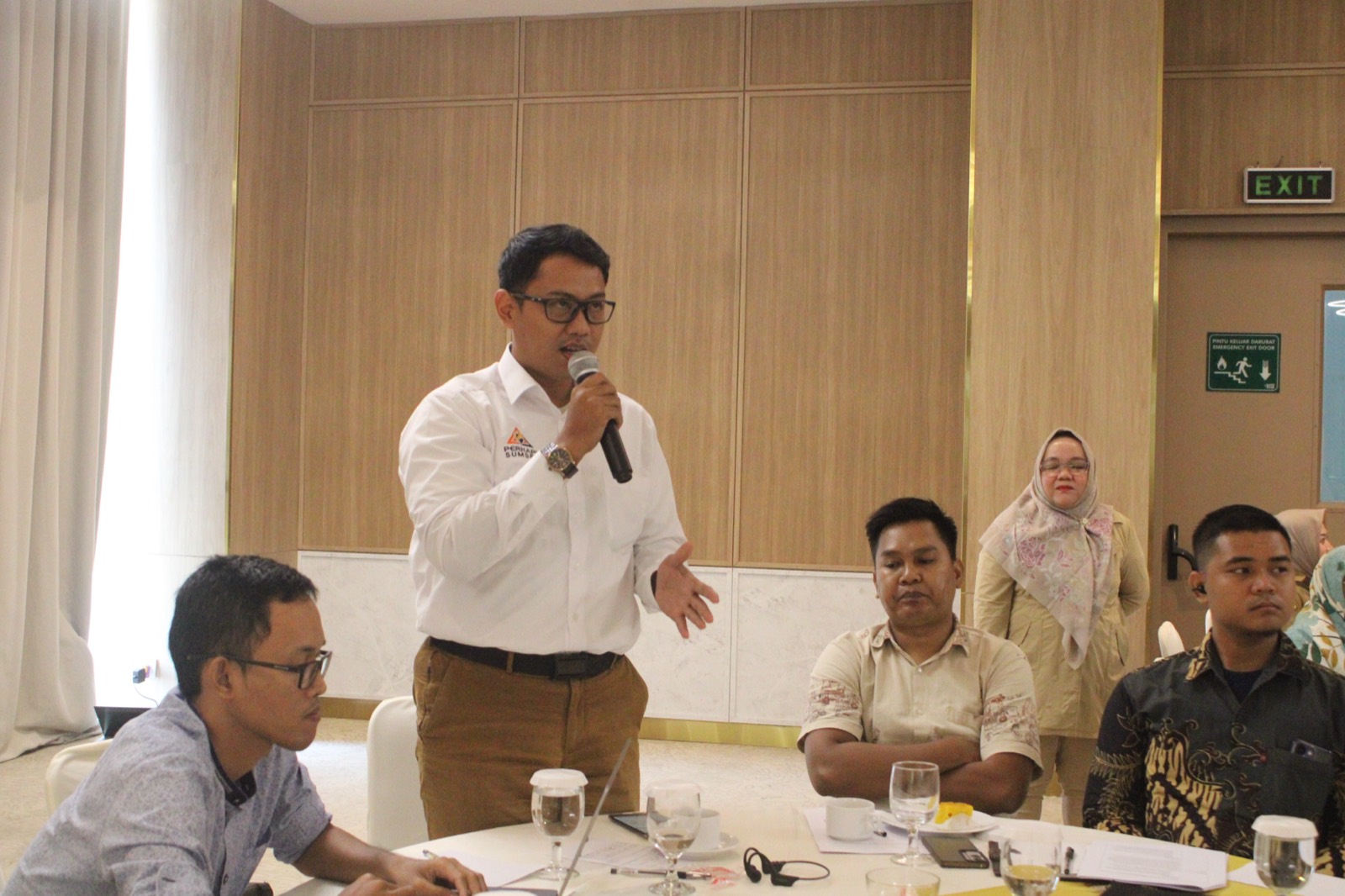
The work of preparing for that sunset is already under way. We have been invited into the Forum Konsultasi Daerah for the acceleration of economic transformation in South Sumatra, convened by the provincial government supported by Bappenas and GIZ, the German agency for international cooperation, as representatives of PERHAPI (Association of Indonesian Mining Professionals).
Post-mining land use is on its agenda: what to plant on land the mines leave behind, and what it would return. The plans are serious and the economics have been modelled. But nobody in the room could say how much of that land there actually is, where it sits, or what condition it is in. The models were being built on a quantity no one had measured.
So we went and produced it, mapping land opening from mining across the province from satellite imagery. That room was the last push we needed to do something with what we already knew how to do, and it set the pattern we intend to repeat: find the evidence a live decision is missing, produce it independently, and publish it where anyone can check it.
We are looking for research partners, commissioning bodies and funders who need independent evidence on extraction and what follows it.